Burnout And Capacity · December 2025 · two-minute read
Belonging: where clarity emerges
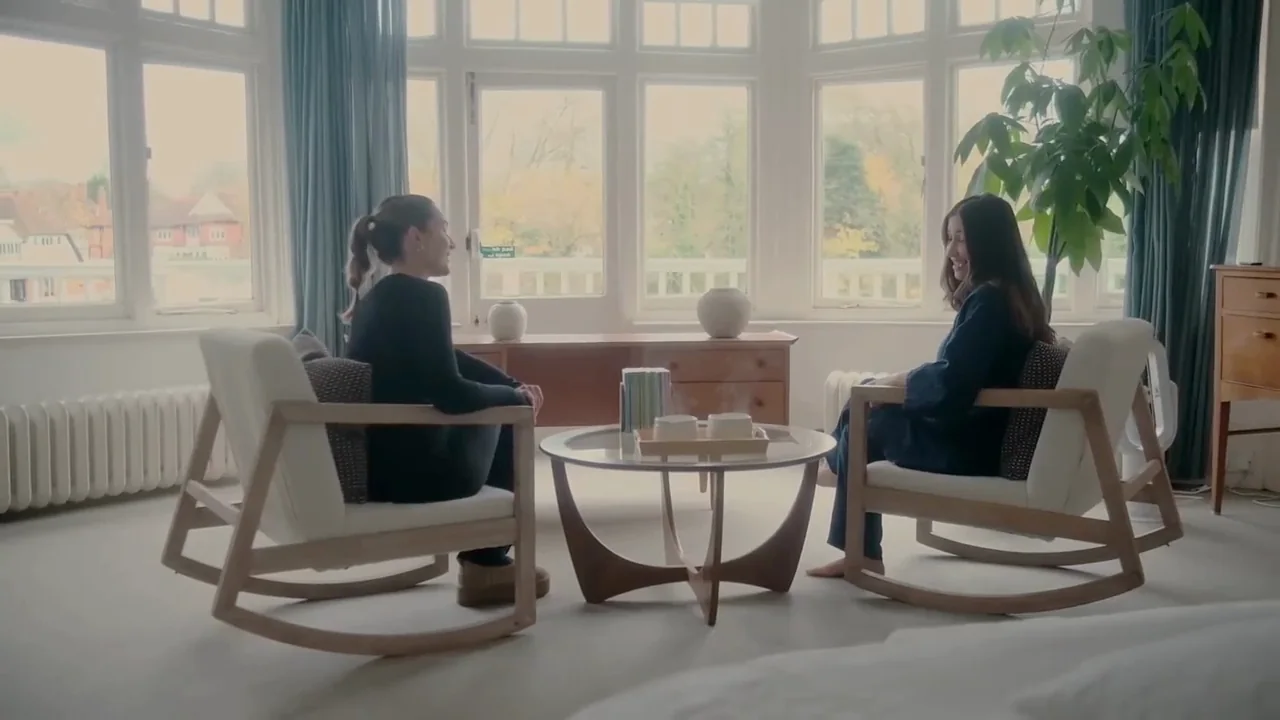
Human beings regulate not only through the body, but through one another. One of the more surprising observations from the Burnout to Capacity pilot was how much changed in rooms where nothing was required of anyone.
Written by River Arts Observatory · December 2025

Human beings regulate not only through the body, but through one another.
Yet many women describe feeling profoundly alone in the responsibilities they carry.
Professional expectations. Family commitments. Emotional labour.
Outwardly life may appear full and connected, but internally many experience a quiet sense of isolation.
One of the most surprising observations from the Burnout to Capacity pilot has been the impact of small group environments.
Participants frequently describe a sense of relief when entering a space where nothing is required of them.
No role to perform. No problem to solve.
Just the opportunity to rest in the presence of others.
Neuroscience increasingly recognises the role of social regulation, the process through which the nervous system settles when we feel safe in connection with others.
When this happens, stress hormones decrease and the body shifts toward parasympathetic recovery.
From this state, something interesting occurs.
Clarity begins to emerge.
Participants often report that decisions which once felt overwhelming suddenly feel manageable.
Not because they were analysed more intensely, but because the nervous system has settled enough for perspective to return.
This is why the quieter sessions at River Arts Club take place in small, supportive groups.
Insight is rarely forced.
It arises naturally when the body feels safe and the mind has space to breathe.
Practices explored in this pillar
- Guided noticing
- Small group circles
- Written notes
- Unhurried conversation
- Silent contemplation
Observations informing our work
Across the pilot cohort, participants consistently report that relational safety plays a significant role in their ability to rest and think clearly.
These observations align with research exploring co-regulation and the role of safe social environments in nervous system recovery.
At River Arts Club, belonging is therefore not a secondary element of the experience.
It is a central part of how capacity returns.
An ongoing conversation
Together these four pillars form the foundation of the So Lab Method.
Sensory regulation allows the body to settle. Sleep rebuilds biological rhythm. Movement rebuilds physical capacity. Belonging allows clarity to emerge.
Through the Burnout to Capacity pilot we continue to explore how these elements interact in the lives of women navigating the demands of modern life.
This piece was first published by River Arts Club during the Burnout to Capacity programme, and is kept here as the Observatory's own record of what that work observed. It describes participants' accounts and the Observatory's reading of them; it is not a referenced evidence review, and the research it gestures at is examined properly elsewhere in these Insights.
This article is written to inform, and does not diagnose, treat or advise on medication; always speak to a qualified clinician about your own health.
Observe your own patterns
The evidence above describes a pattern, not any one woman’s week. Membership gives you a way to notice your own, gentle daily observation read alongside research like this, over the weeks it actually takes to see a shape.
Become a memberRead next
- 7 min read
What We Mean by Human Capacity
Capacity is not productivity. It is the room to live well.
- 10 min read
Recovery is not rest, what rebuilds capacity according to the evidence
Lying down and doing nothing is not automatically the same thing as recovering. Occupational health research describes recovery as a specific set of psychological experiences, and shows that the people who need them most are often the least able to access them.